Newsletter Subscribe
Enter your email address below and subscribe to our newsletter

 ByJohn A
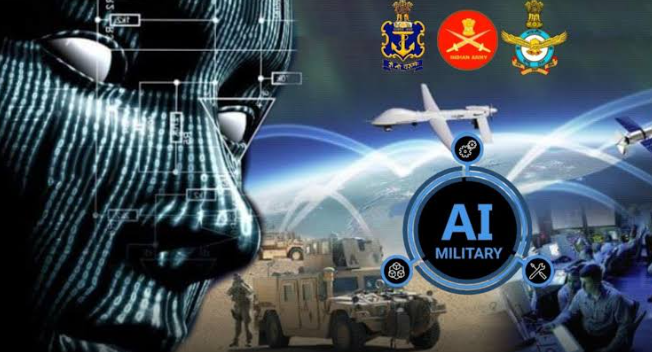
AI reshapes the battlefield by speeding data fusion, sensor integration, and decision cycles while preserving human oversight. Autonomous systems and decision-support tools span a spectrum that balances tempo with risk. Security, resilience, and verifiability become core requirements as governance, ethics, and transparency strive to avert unintended harm and escalation. Nations face a framework of norms, controls, and oversight that must stabilize strategic competition—yet the path forward remains unsettled, demanding careful scrutiny of trade-offs and safeguards.
AI transforms the battlefield by enabling faster, more accurate decision-making through data fusion, sensor integration, and autonomous processing. This analysis frames core concepts: autonomy vs accountability shapes governance and risk, while perception vs reality tests operator trust in algorithmic outputs. Systemic emphasis on security, resilience, and verifiability ensures strategic advantage without compromising civil oversight or ethical constraints.
See also: erikkapost
The deployment of AI systems in military contexts spans a continuum from autonomous platforms to decision-support frameworks, reflecting a deliberate balance between speed, accuracy, and human oversight.
These systems optimize operational tempo while preserving accountability.
In practice, autonomous weapons and battlefield analytics shape strategy, enabling swift threat assessment and informed command decisions without surrendering strategic sovereignty or human judgment to automated processes.
The deployment of AI in warfare introduces a complex risk landscape that encompasses operational, legal, and societal dimensions, demanding rigorous governance to prevent unintended escalation, civilian harm, and erosion of accountability.
This analysis emphasizes safeguarding strategic stability, transparent decision processes, and robust oversight.
Unintended consequences and ethical accountability remain central concerns, guiding policy frameworks, risk assessment, and responsible integration of autonomous systems in contested environments.
Nations assess AI-enabled military capabilities through structured, defense-oriented evaluations that balance technical feasibility with strategic risk.
Regulators pursue harmonized risk assessment frameworks and enforceable transparency standards to curb escalation, ensure accountability, and deter misuse.
Judicial review, export controls, and international norms guide procurement and collaboration, while independent oversight reinforces trust.
The approach blends national security interests with global stability and responsible innovation.
AI ethics and civilian risk will shape future conflicts: the question concerns casualty trajectories, not tactics. The analysis suggests tighter governance reduces civilian harm, while imperfect systems may blur accountability; ultimately, strategic restraint and transparent risk assessment constrain civilian casualties.
Can AI systems be trusted to follow international humanitarian law? Yes, but only through patterned ethics and robust governance models, with continuous oversight, transparent audits, and strategic risk assessment guiding adaptive, security-focused deployment for freedom-minded audiences.
Costs and maintenance depend on hardware, software complexity, and supply chains; reliability uptime hinges on rigorous testing, secure updates, and redundancy. The analysis emphasizes lifecycle budgeting, risk management, and continuous monitoring to sustain strategic security advantages.
Can transparency exist amid combat pressures? The assessment notes limited interpretability; unintended bias can emerge, while data provenance challenges complicate trust. Analysts diagnose decision visibility, balancing security imperatives with operational clarity and freedom-seeking institutional scrutiny.
AI-driven dynamics may both spur and temper arms competition; the outcome hinges on governance. The analysis considers ai ethics and autonomous weapons, emphasizing strategic stability, transparency, norms, and restraint to mitigate escalation while preserving freedom of action.
In the theater of modern conflict, AI acts as a tectonic shift beneath the boots of strategy. Silently, dashboards glow with predictive currents while operators weigh risk against speed. Autonomy and decision-support braid together, shaping tempo and accountability in equal measure. As nations thread governance, ethics, and transparency, the battlefield memory becomes a ledger of safeguards. The horizon remains guarded: stability hinges on verifiable systems, resilient networks, and a shared duty to restrain miscalculation.